Hello, 3 A.M. My Old Friend…
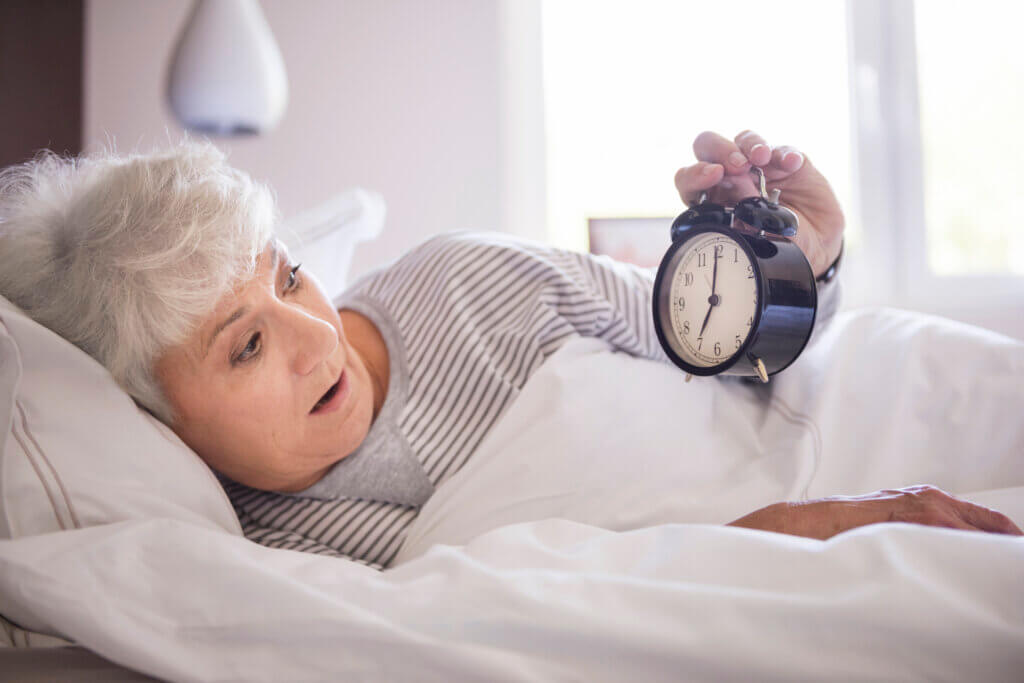
It’s 3:07 in the morning. You were sleeping just fine, and suddenly, bunk, wide awake. You roll over, fix your pillow, pull up the covers, and look at the clock. Then your brain turns on. Okay, if I fall asleep right now, I can still get three more hours. Except I have this meeting, and this thing, and the kids have that, and I need to be sharp. And just like that, your brain is open for business.
Does that sound familiar? It doesn’t only happen to perimenopausal women. It’s probably happened to you before, even if you don’t remember it. But if you’re a woman in midlife, you’ve heard all kinds of explanations. It has to be your cortisol. It’s your blood sugar. It’s menopause. And there are a million supplements out there and somebody ready to sell them to you.
When you understand how you sleep and why you sleep the way you do, it’s easier to see why this happens and to nail down some of the causes. There are several physiological reasons we wake up during the night. Some are totally normal. Some deserve attention. That’s the awareness piece: when we pay attention, we can choose what we’re doing, shift some things around, and continue on.
We tend to think we should fall asleep, stay unconscious for eight hours, and wake up feeling fabulous. Sleep doesn’t work that way. Our brains cycle through several stages throughout the night. There’s non-REM sleep, which includes lighter and deeper stages. Deep sleep is particularly important for physical restoration. Then there’s REM sleep, which is usually associated with dreaming and is important for memory and emotional processing. Those sleep cycles are around 90 minutes each, though everybody is a little different.
Here’s what matters. Earlier in the night, we spend more time in deep sleep. Early to bed, early to rise, right? So all my nighttime warriors who love staying up until 1 or 2 in the morning, you may be missing your best window for deep sleep. Take that as some information for yourself. Later in the night, REM sleep becomes more prominent, and brief awakenings between cycles can be normal. You may not even realize you woke up.
So the issue isn’t necessarily that you wake up. It’s why you wake up, and why you can’t get back to sleep.
Your brain doesn’t completely shut down at night, and we wouldn’t want it to. If a fire alarm goes off, we want our brains to say, wait a minute, what’s happening? Those of us who’ve been moms know a train or a tornado can roll through, but that baby three rooms over lets out one tiny peep and you hear it. Even while we sleep, our brains monitor what’s happening around us and inside our bodies: temperature, noise, discomfort, breathing disturbances. A mom’s brain has learned which signals deserve attention. Our nervous systems can become more responsive to particular signals through experience and conditioning, and sometimes that heightened responsiveness makes it harder to get back to sleep.
Two systems regulate sleep. The first is sleep pressure. The longer you’re awake, the more your need for sleep builds, and a chemical called adenosine contributes to that. As you sleep, the pressure decreases. By 3 a.m., you’ve already relieved some of it, so falling back asleep can be harder than falling asleep in the first place, when you hit the bed and you’re out.
The second is your circadian rhythm, which is fascinating for those of us who are geeks. Your internal biological clock coordinates sleepiness, alertness, body temperature, and hormone rhythms. These two systems work together to regulate sleep and wakefulness.
And yes, cortisol takes part in that process. Cortisol normally begins to rise toward morning. That doesn’t necessarily mean you have elevated cortisol. You can’t look at the clock and say, “Oh, my cortisol is high.” That’s not how we figure that out. Around 3 a.m., you’ve also got decreasing sleep pressure and adenosine changes, so we have to pull apart what’s actually important.
Cortisol is essential. Without it, we’d be a mess in terms of inflammation. We can be a mess with too much and a mess with too little. It needs to be balanced. But it isn’t the villain of every health conversation. Last week we talked about how not everything belongs in the perimenopause bucket. Well, not everything belongs in the cortisol bucket either.
Brief nighttime awakenings are normal. Persistent difficulty getting back to sleep deserves a little attention, and that means looking at what happened during your day.
Your body brings your entire day to bed with you.
Not that you wanted it to, but it does. Your nervous system doesn’t become a different system when you climb into bed. It carries your daily activities, your environment, your physiological demands, and all your stressors right along with you. Think about a typical day. Work, family, exercise, responsibilities, emails, a boss. A husband or partner, or maybe you’re alone, and that can be a stress of its own. Running errands, getting things done. You finally sit down at 9:00, scroll through your phone, and expect to be ready to sleep 15 minutes later. Scrolling is one of the worst things you could be doing at that time. You know that, and I’m not here to harp on it. I might be guilty of it sometimes too.
Our bodies need the opportunity to transition between activation mode and recovery mode. That’s regulation, and several things influence it.
Exercise is one. Moving your body, even walking 30 minutes a day, which is kind of the minimum, can improve your sleep. If you haven’t started walking, start with five minutes a day. That’s better than zero. It doesn’t have to be perfect. But timing, intensity, and recovery matter. Lots of y’all tolerate an evening workout. Awesome. I’m not one of those people. If I work out or even take a fast walk at 6 or 7 at night, boom, I’m wide awake and have a very hard time falling asleep. What matters more is your entire training load. Are you exercising hard, eating adequately, and recovering? If you keep adding demands without enough recovery, it will affect your sleep, because adaptation requires resources, and sleep is one of them.
Now I’m going to poke a little piece of cotton in your eyeball, because you probably know what I’m about to say. Food, alcohol, and caffeine have a huge impact on how we sleep.
A large meal close to bedtime can create digestive issues, and it also keeps your heart rate higher for longer. When your heart rate is high, your metabolism is high, and you won’t sleep as well as you could. But if you’re genuinely hungry, that can interfere with your sleep too. That’s where awareness comes in, so you can decide what to shift. I’m not saying a giant meal before bed is good. I’m saying you may need a fat and protein snack right before bed. And I’m not talking about a Snickers, because that’s a lot of sugar.
Alcohol is particularly interesting. A good glass of wine makes you feel sleepy and relaxed, but it completely disrupts your sleep architecture, including your REM sleep and deep sleep, and increases awakenings later in the night. It also plays with your blood sugar, which most people don’t realize.
Caffeine blocks those adenosine receptors, which reduces your perception of sleep pressure. Depending on how fast you metabolize it, caffeine can last up to 12 hours. You may not feel stimulated, but your body is. Even if you fall asleep easily, caffeine after 12 to 2 in the afternoon can still give you poor-quality sleep.
Then there’s light. Bright light is one of the strongest signals regulating your circadian rhythm. Morning daylight reinforces the timing of your sleep-wake cycle. Bright light in the evening can delay your body’s ability to prepare for sleep. After 7 p.m., think one small light, not the big overhead LEDs. Something calm. Consistent wake times, morning light, and less bright evening light can be super helpful for getting your circadian rhythm back on track. This isn’t about a perfect routine. You know I’m so not about perfection. It’s about consistent signals over time.
The answer to why you’re awake at 3 a.m. may begin with what happened at 3 p.m.
So what about hormones? Perimenopause does change our sleep environment. Estrogen and progesterone influence many of the systems involved in sleep, and they can fluctuate a lot. But the relationship between hormones and sleep is far more complicated than blaming reduced estrogen. Lower progesterone plays a huge role in not being able to sleep, and a lot of people don’t realize it. A little progesterone can go a long way in creating really good sleep architecture.
Estrogen may be involved in temperature regulation. As estrogen levels change, you can get vasomotor symptoms, which is the technical term for hot flashes and night sweats. Those will definitely disrupt your sleep. They aren’t always dramatic. Sometimes you’re just a little uncomfy, and sometimes it’s a full-blown, full-body sweat with wet sheets. There are effective hormonal and non-hormonal treatments for vasomotor symptoms, depending on your circumstances.
Progesterone metabolites interact with receptors involved in the calming activity of the brain. If you still have a cycle and notice irritability during the day and trouble sleeping at night the week before your cycle starts, that’s a lower-progesterone time. It’s also why progesterone has something of a sedating effect. But hormonal physiology and taking progesterone as a medication aren’t the same thing. Not everyone with nighttime awakenings needs progesterone. That has to be assessed individually.
You can take melatonin. It’s the primary signal of biological nighttime, and it helps regulate your circadian timing. But it isn’t an on-off switch for consciousness, and taking more of it doesn’t necessarily improve your sleep. We have to look at the underlying cause.
Sleep apnea may be something that’s been overlooked in all of this. Ladies, sleep apnea is not just a condition affecting overweight, middle-aged men who snore. Women’s risk of obstructive sleep apnea increases with menopause, but we don’t always have the typical symptoms. We may just get up more often to urinate. We may not feel fresh during the day. We may have morning headaches or poor concentration. A lot of women don’t realize they could have it because nobody told them, especially my single ladies. If this sounds like you, look into it and get a sleep study done. They’re super easy. It’s a watch or a little monitor you wear at home in your own bed. No amount of magnesium or lavender oil is going to correct a sleep apnea issue.
Pain, reflux, medication, restless legs, and nighttime urination can all disturb sleep too. And sometimes the problem becomes chronic insomnia, where the brain has developed a learned response between bedtime and wakefulness. Hormones may influence sleep, but they don’t explain every nighttime awakening.
So stop fighting the night. What actually helps?
Stop watching the clock. You don’t need to calculate how many hours of sleep you have left. Love you, but you don’t. Brief awakenings are normal, and your bed doesn’t need to become a battleground. If you’re awake and getting frustrated, get out of bed. Keep the lights low and do something quiet. Grab your Kindle with a black screen and white letters. I use the Calm app (I don’t get paid for that), put on a relaxation sleep meditation, and I’m usually out within two or three minutes. That’s a cognitive behavioral approach, and I love cognitive behavioral therapy. Find something to meditate to and throw in your AirPods. I know none of us love having our phones and electronics in bed, but sometimes it can help you get back into a good rhythm.
Then go back to Awareness, Choice, Adjust, Continue. What’s your awareness? Are you hot? Uncomfortable? What’s waking you? Is it alcohol? Late workouts? Pick one reasonable change, or one thing to look into more deeply, and make that adjustment consistently enough to see whether it really helps. Two days isn’t enough. After a couple of weeks, you’ll probably have an idea. If it helps, keep going. If it doesn’t, reassess, try something new, or get an appropriate evaluation, whether that’s hormonal or for sleep apnea. And don’t change six things at once, or you won’t know what’s helping. One thing at a time.
The goal isn’t to control your sleep. It’s to understand what supports your sleep. That’s part of stewardship. I love data, but data should inform us, not rule us.
One of my favorite verses is Psalm 4:8: “In peace I will both lie down and sleep; for you alone, O Lord, make me dwell in safety.” That verse isn’t a promise that Christians will never experience insomnia, ladies. But caring for our health is part of stewardship. It means faithfully caring for what God has entrusted to us, and that’s exactly what we’re learning inside the Living F.R.E.S.H. Collective. Health isn’t a destination. It’s a direction.
So tonight, if you happen to wake at 3 a.m., don’t immediately assume something is wrong. Maybe it’s just something to pay attention to. Now go back to sleep.
Comment FRESH below or DM FRESH to @drkrissargent on Instagram. I answer my own DMs, and I’ll tell you more about the Living F.R.E.S.H. Collective membership that is OPEN NOW for Founding Members.
